
Neither route is automatically better. The right choice depends on how much design control, coordination and delivery responsibility your project needs. In design build versus traditional construction, the key difference is the contract structure: design and construction sit with one entity under design-build, while traditional procurement appoints the designer and contractor separately. That distinction affects who leads the work and how decisions are made.
Cost and timing matter, but the lowest tender or a single point of contact will not suit every brief. Traditional procurement lets you stay more involved in the design before construction is tendered. Design-build brings design and construction together, supporting closer coordination but potentially reducing your control over detailed design after the contract is awarded.
This comparison explains how the approaches differ in cost, control, risk and project delivery, and which may suit your priorities. Use the practical guidance to weigh your design requirements, appetite for coordination and preferred level of involvement.
Key Takeaways
- Decide how much influence you want over contractor and supplier selection before choosing a procurement route.
- Compare the full project sequence, including design development and tendering, when considering delivery time.
- Weigh traditional procurement’s strengths in design oversight and tender comparisons against its coordination demands.
- Use your priorities for design detail, project involvement and delivery responsibility to guide your final choice.
Wrapping Up: Is Design-Build construction the way forward?
Choose a procurement route by weighing design control against coordination and responsibility. The contract sets out who appoints the team and manages decisions.
Contractor Responsibility and Client Control
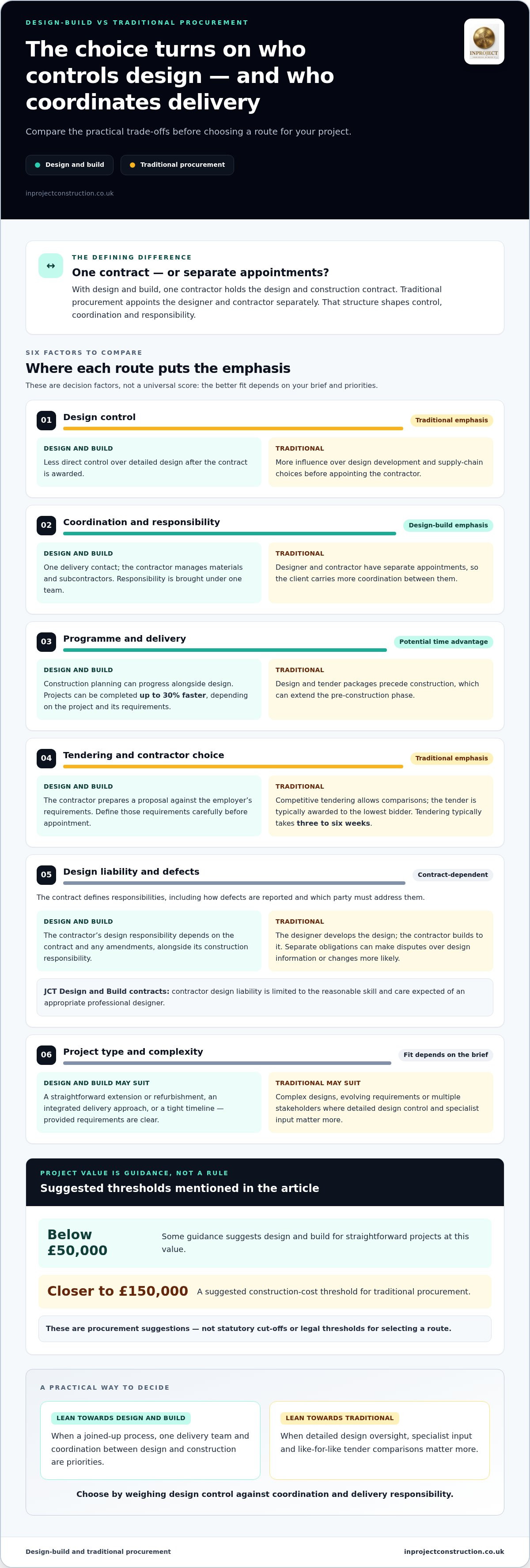
With design and build, one contractor holds a single contract for design and construction and manages materials and subcontractors. This gives you one delivery contact, but less direct control over detailed design after the contract is awarded. Traditional procurement uses separate client appointments for the designer and contractor, giving you more influence over the design and supply-chain selection. Tendering typically takes three to six weeks, and traditional projects award the tender to the lowest bidder.
Design Responsibility, Liability and Defects
In design and build, the contractor’s design responsibility depends on the contract and any amendments, alongside its responsibility for construction. Traditional procurement separates those obligations: the designer develops the design, and the contractor builds to it. JCT Design and Build contracts limit contractor design liability to the reasonable skill and care expected of an appropriate professional designer. In either route, the contract defines how defects are reported and which party must address them, according to its responsibilities.
Risks and Disputes
Traditional procurement can lead to disputes between separately appointed consultants and the contractor, particularly over design information, construction requirements or changes. The client also carries the risk of consultant or contractor non-performance. Design and build brings delivery under one team, reducing divided contractual responsibility, although it can be harder to distinguish responsibility for a design or construction issue within that team. Changes after work begins may also require negotiation over cost or additional time.
| Procurement route | Responsibility | Client control | Tender and supply chain |
|---|---|---|---|
| Design and build | One contractor, as set out in the contract | Less control over detailed design after contract award | Contractor manages materials and subcontractors |
| Traditional | Designer and contractor have separate appointments | Greater influence over design and supply-chain choices | Competitive tender; lowest bidder receives the award |
Choose traditional procurement for direct design and supplier control; choose design and build for integrated responsibility.
Traditional Procurement vs Design & Build: Which One is Better?
Traditional procurement and design and build organise project delivery differently. The right route depends on your timeline, design priorities and project type.
Project Timelines and Delivery
Design and build allows construction planning to progress alongside design, rather than waiting for every design detail before planning the build. Work can start on site after planning permission and building regulations approval. Design-build projects can be completed up to 30% faster than traditional construction, although the programme depends on the project and its requirements. Traditional procurement separates design and construction, which can extend pre-construction as design and tender packages are prepared.
Allow time at the outset to define your requirements and assess proposals. An integrated route can help coordinate design decisions with construction planning, while a separate design phase gives you more time to develop the brief.
Procurement Routes and Project Priorities
Choose design and build if a joined-up process and a single delivery team matter most. The contractor prepares a proposal against the employer’s requirements, so develop those requirements carefully before appointment. Traditional procurement may suit you if you prioritise detailed design control, specialist input or like-for-like tender comparisons. Separating design from construction gives you more involvement before selecting the contractor.
Project value can inform the discussion, but it isn’t a legal threshold for selecting a route. Some guidance suggests design and build for straightforward projects below £50,000, whilst a suggested threshold for traditional procurement is closer to £150,000 in construction costs. These are procurement suggestions, not statutory cut-offs.
Project Types for Each Procurement Route
Design and build may suit a straightforward extension or refurbishment where an integrated approach helps coordinate decisions. It can also suit a tight timeline, provided your requirements are clear enough to shape the contractor’s proposal. Traditional procurement may be preferable for complex designs, evolving requirements or projects with multiple stakeholders, where detailed design control and specialist input matter more.
UK law doesn’t require homeowners to appoint an architect for a domestic renovation or extension. The decision can instead reflect the project’s complexity and the design input needed. For residential work where integrated delivery fits your priorities, explore design-build construction.
Advantages and disadvantages of traditional procurement
Traditional procurement, often called design-bid-build, suits clients who want a defined design before selecting a contractor. Its strengths in design oversight and tender comparison come with additional coordination and pre-construction work.
Procurement for Tight Deadlines
For a tight deadline, traditional procurement can be challenging because design and tender packages precede construction. Design and build can overlap construction planning with design, helping teams prepare earlier. In an office redesign, map approval milestones, access constraints and essential services before choosing. A project manager can coordinate decisions among design, construction, IT and furniture teams, reducing avoidable scheduling conflicts.
Traditional Procurement and Design-Bid-Build
Traditional procurement follows a clear sequence: the client appoints consultants, develops the design, then tenders the completed work. This design-bid-build method lets owners compare bids against a common scope and assess price, quality or both. Many traditional construction contracts are fixed-price lump sums, which can support cost and design certainty when documents are complete. Competitive tendering may lower costs, but pre-construction generally takes longer.
Consider a refurbishment with specific layouts, services and finishes to coordinate. Traditional procurement lets you resolve these details before appointing the contractor and retain more influence over design quality. However, separate consultants and a contractor require clear decisions, document control and communication. Gaps between drawings and site work can cause friction, so this method suits owners who value detailed design and comparable tenders over faster early delivery.
A develop-and-construct hybrid can bridge the stages: the client’s design team establishes requirements, then continues under the contractor through novation for detailed design and delivery. A UK design-and-build contract can set the contractor’s design obligations across the works, with responsibilities shaped by its terms. This route can retain early client input while integrating later work. Define the design intent and examine the contractor’s proposal before committing.
Design-build and traditional design-bid-build comparison
The practical difference in design build versus traditional construction is when design and construction duties are assigned. That decision shapes fee visibility, tender comparisons and how changes affect the project.
Costs and Fees by Procurement Method
Traditional procurement can involve professional fees before tender, while feasibility and total project costs are still developing. Design and build can establish construction costs earlier, but you may commit before the design is fully developed. Scope changes can add cost and time, so compare consultant appointments, engineering design, specifications and exclusions. For residential work, the price depends on project scope, design detail, engineering requirements and changes, and is provided after a quote request.
Design-Build and Traditional Procurement Processes
According to UK Government, design and build appoints the main contractor to design and construct the works. Under a traditional contract, the client appoints consultants to design the development before appointing a contractor to build it. With design-bid-build, the client completes the design before tendering, enabling competitive proposals against a defined scope. Design and build combines proposal development and delivery under one contractual responsibility, as set out in the contract.
These procurement methods allocate design development, tender competition and coordination at different stages. Separate consultant appointments, for example, can preserve client input while engineering requirements evolve. Integrated delivery can bring construction knowledge into design decisions earlier, which may help when buildability and coordination matter most.
For a homeowner comparing design build versus traditional construction, the next step is to record the employer’s requirements and identify design elements that must remain under client control. Compare proposals for scope, exclusions, design duties, tender assumptions, change procedures and completion obligations. A lower tender is meaningful only when scopes align; a single point of responsibility is useful when contractual duties are clear. Discuss your residential design-build brief in light of the delivery priorities that matter most.
INPROJECT CONSTRUCTION: Residential Refurbishments
INPROJECT CONSTRUCTION Ltd helps homeowners planning a residential refurbishment or home extension choose an approach suited to their brief. When weighing up design build versus traditional construction, its integrated service brings design and construction together, while the project’s scope and priorities guide the best-fit route.
For high-end residential projects, clear requirements for design detail, decision-making and delivery responsibilities provide a practical starting point. Set out what matters most, whether that is retaining design control or bringing the stages into one coordinated process, then discuss how those priorities shape the work.
Contact INPROJECT CONSTRUCTION Ltd to discuss your residential project.
Shape Your Next Project with Confidence
Choosing between design build and traditional construction is an opportunity to decide how you want to shape your home, not simply how the work is contracted. Before taking the next step, write down the outcomes that matter most: the design decisions you want to lead, the level of coordination you prefer and what will make the finished space feel right for you. A clear brief gives project discussions a purposeful starting point.
For a residential refurbishment or home extension, INPROJECT CONSTRUCTION provides Residential Refurbishments and Design Build Construction, including work on high-end residential projects. Start with your priorities, then develop a considered approach for your home and the scope of work.
Contact INPROJECT CONSTRUCTION today to discuss your project and take a confident first step towards shaping it.
Frequently Asked Questions
When should you use the traditional procurement method for your project?
Choose traditional procurement when you want the design resolved before appointing a contractor, especially if your brief includes detailed requirements. A home with carefully specified room layouts or finishes, for example, may benefit from settling those decisions before tender. This route also suits clients who want to compare contractor tenders against the same design and scope, and can allow time for design development before construction.
Design and Build vs Architect and Builder: Which Route?
Choose an architect and builder arrangement if you want to appoint design advice separately from the construction team. The architect can develop the brief and drawings with you, while the builder prices and carries out the defined work. Design and build may suit you if you prefer one delivery team to coordinate design and construction. Consider who will make design decisions and how changes will be agreed.
What are the pros and cons of each route?
Traditional procurement supports direct design involvement and comparable tenders, but you must coordinate separate appointments and decisions. Design and build brings design and construction into one delivery arrangement, which can simplify coordination but may reduce your influence over detailed design after appointment. For either route, define the scope, decision-making responsibilities and change procedures before signing, so expectations are documented.
What does ‘Traditional’ mean?
In construction procurement, “traditional” means the client appoints a professional team to design the project, then tenders the completed design to contractors. It is also known as design-bid-build or bid-build. The contractor builds to the agreed design rather than developing the overall design as part of a combined appointment. Contract documents describe the work and set out each party’s obligations.
What is develop & construct?
Develop and construct is a hybrid route: the client’s design team develops the initial design, then the contractor takes responsibility for completing the design and construction. For example, a client may establish the layout and design intent before the contractor develops technical details. The appointment and contract should explain which design work transfers, who completes it and how the client’s requirements remain part of the agreed scope.
What is the difference between design and build and traditional construction in the UK?
In design and build, a contractor is appointed to design and construct the works; traditional procurement separates those appointments. The choice affects who coordinates the design team and how you participate in decisions. For homeowners planning work in Bayswater, Kensington and Chelsea, Belgravia, Eaton Square, Notting Hill Gate, London, Mayfair, Knightsbridge, Westminster, South Kensington, Paddington, Harrow, Wimbledon, Wembley, Dulwich or Fulham, begin by defining your brief and desired level of design involvement.


